
Online Class: Marine Biology 101
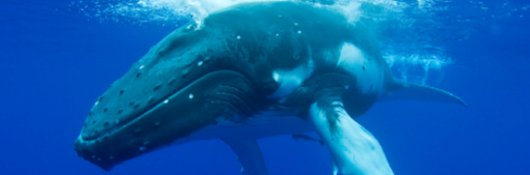
no certificate
with CEU Certificate*
-
17Lessons
-
22Exams &
Assignments -
3,134Students
have taken this course -
9Hours
average time -
0.9CEUs
Course Description
Dive into the Depths: Exploring the World of Marine Biology
Spanning over 70% of our planet's surface, the oceans are a vast, mysterious, and captivating realm teeming with life. Marine biology isn't just about understanding saltwater ecosystems, but unraveling the intricate tapestry of life that resides, thrives, and even orchestrates planetary processes within them. From the shimmering surface to the abyssal depths, every droplet of seawater holds a story of evolution, adaptation, and survival.
The genesis of life, according to scientists, took place in these saline expanses. Over epochs, life forms diversified and migrated to terra firma. Yet, some, like dolphins and whales, made a prodigious journey back into the marine embrace. One of the lesser-known marvels of our oceans is the microscopic phytoplankton. Despite their diminutive size, they play a colossal role in maintaining planetary health by producing a significant portion of the oxygen we breathe while also acting as a natural sink for carbon dioxide.
Oceans are the planet's lifeblood, with currents acting as arteries, transporting warmth and nutrients. Their dynamic nature, with evaporation and precipitation, orchestrates the global climate and weather patterns. The oceans' profound impact on global systems underscores the importance of understanding them.
Our meticulously designed course will take you on an enlightening journey:
- Lesson 1: Oceanography Essentials: Set sail with a foundational understanding of the marine world.
- Lesson 2: The Bedrock Beneath: Delve deep into marine geology and the oceans' underlying structures.
- Lesson 3: Riding the Waves: Navigate the fascinating realm of marine currents and tides.
- Lesson 4: Nomenclature Navigations: Discover the taxonomy of marine species.
- Lesson 5 & 6: A classification voyage through invertebrates and vertebrates.
- Lesson 7 & 8: Meet the fascinating marine fish and mammals that reign the oceans.
- Lessons 9-11: Ecosystem Expeditions - Dive into diverse habitats, from coral kingdoms to serene estuaries.
- Lessons 12 & 13: Coral Chronicles - Unravel the biology and ecosystems of coral reefs.
- Lessons 14-16: Journey from the frigid polar oceans to the open seas and the dark, mysterious abyss.
- Lesson 17: Heeding the Sirens: Address the contemporary challenges facing our oceans and the ways to safeguard their future.
You will encounter a plethora of life forms, from soaring marine birds and elusive reptiles to the myriad of fish that glide and dart through the oceanic expanses. Uncover the relationships, symbioses, and ecological intricacies that bind these creatures together in the vast marine biome. More importantly, become aware of the mounting threats these delicate ecosystems face.
Embark on this immersive odyssey and uncover the stories, secrets, and science of the oceans. Dive deep, for the tales of the seas are as boundless as the waters themselves. Join us, and let the waves of knowledge guide your voyage into the world of marine biology.
Course Motivation
Not all organisms can live in a high salinity environment. People, for example, can't survive in saltwater. Since you have no special adaptations to remove salt, if you drink too much seawater, your kidneys will try to flush the excess salt out as quickly as possible through urine, and you would lose more water than you originally drank, leaving you dehydrated. If you didn't correct the situation by replacing fluids with fresh (non salty) water, your organs would eventually shut down and you would die.
Living in the ocean requires special adaptations, like a tolerance for salt or a way to remove the excess effectively, the ability to move through the water, find food, hide from predators, and locate a mate.
According to the theory of evolution, as generations passed, the descendants changed, or evolved, until they did not resemble one another at all. Once these distant relatives weren't able to reproduce with one another, they became entirely different species. Scientists study all the different organisms existing today and analyze the traits that they have in common to group them into families. Although scientists argue about how evolution happens and how long the process takes, they do agree that change is constant and that it's going on right now. Species which did not change, or adapt, to changing circumstances eventually died out and became extinct.
Understanding the relationships between species has helped scientists derive useful medicines from natural sources, like a substance in horseshoe crabs that is now used in leukemia treatments.
- Completely Online
- Self-Paced
- 6 Months to Complete
- 24/7 Availability
- Start Anytime
- PC & Mac Compatible
- Android & iOS Friendly
- Accredited CEUs
Course Lessons


Lesson 1: Introduction
 Lesson 1 Video
 Lesson discussions: Marine Biology; Reasons for Taking this Course
 Complete Assignment: An Introduction
- Assessment: Lesson 1: Introduction
Lesson 2: Geology and the Ocean
- Lesson 2 Video
- Assessment: Lesson 2: Geology and the Ocean
Lesson 3: Currents and Tides
- Lesson 3 Video
- Assessment: Lesson 3: Currents and Tides
Lesson 4: What's in a Name?
- Lesson 4 Video
- Assessment: Lesson 4: What's in a Name?
Lesson 5: Invertebrates
- Lesson 5 Video
- Complete: Lesson 5 Assignment
- Assessment: Lesson 5: Invertebrates
Lesson 6: Vertebrates
- Lesson 6 Video
- Assessment: Lesson 6: Vertebrates
Lesson 7: Marine Fish
- Lesson 7 Video
- Assessment: Lesson 7: Marine Fishes
Lesson 8: Marine Mammals
- Lesson 8 Video
- Complete: Lesson 8 Assignment
- Assessment: Lesson 8: Marine Mammals
Lesson 9: Marine Ecosystems
- Lesson 9 Video
- Assessment: Lesson 9: Marine Ecosystems
Lesson 10: Life at the Shore
- Lesson 10 Video
- Lesson discussions: Tide Pools
- Assessment: Lesson 10: Life at the Shore
Lesson 11: Estuaries
- Lesson 11 Video
- Assessment: Lesson 11: Estuaries
Lesson 12: Coral Reef Biology
- Lesson 12 Video
- Assessment: Lesson 12: Coral Reef Biology
Lesson 13: Coral Reef Ecosystems
- Lesson 13 Video
- Assessment: Lesson 13: Coral Reef Ecosystems
Lesson 14: Life in the Polar Oceans
- Lesson 14 Video
- Complete: Lesson 14 Assignment
- Assessment: Lesson 14: Life in the Polar Oceans
Lesson 15: The Open Sea
- Lesson 15 Video
- Assessment: Lesson 15: The Open Sea
Lesson 16: Life in the Ocean's Depth
- Lesson 16 Video
- Lesson discussions: Marine Organisms
- Assessment: Lesson 16: Life in the Ocean's Depth
Lesson 17: Oceans in Jeopardy
- Lesson 17 Video
- Lesson discussions: Ocean Challenges; Program Evaluation Follow-up Survey (End of Course); Course Comments
- Assessment: Lesson 17: Oceans in Jeopardy
- Assessment: The Final Exam
Learning Outcomes
- Define what marine biology is and why it is important to study.
- Describe geology and the ocean, currents and tides.
- Understanding the nomenclature of marine biology
- Identify invertebrates of the marine environment.
- Identify vertebrates of the marine environment.
- Identify marine fish.
- Identify marine mammals.
- Describe marine ecosystems.
- Summarize what estuaries are and why they are important.
- Summarize coral reef biology and ecosystems.
- Describe life in the polar oceans and the open sea.
- Describe life in the ocean's depth and its future with the human race.
- Demonstrate mastery of lesson content at levels of 70% or higher.
Additional Course Information
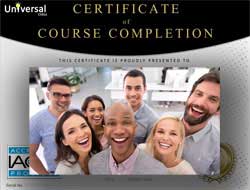
- Document Your Lifelong Learning Achievements
- Earn an Official Certificate Documenting Course Hours and CEUs
- Verify Your Certificate with a Unique Serial Number Online
- View and Share Your Certificate Online or Download/Print as PDF
- Display Your Certificate on Your Resume and Promote Your Achievements Using Social Media

Choose Your Subscription Plan
No Certificate / No CEUs
This course only
| Includes certificate | X |
| Includes CEUs | X |
| Self-paced |

|
| Instructor support |
|
| Time to complete | 6 months |
| No. of courses | 1 course |
Certificate & CEUs
This course only
| Includes certificate |
|
| Includes CEUs |
|
| Self-paced |
|
| Instructor support |
|
| Time to complete | 6 months |
| No. of courses | 1 course |
Certificates & CEUs
Includes all 600+ courses
| Includes certificate |
|
| Includes CEUs |
|
| Self-paced |
|
| Instructor support |
|
| Time to complete | 12 Months |
| No. of courses | 600+ |
Certificates & CEUs
Includes all 600+ courses
| Includes certificate |
|
| Includes CEUs |
|
| Self-paced |
|
| Instructor support |
|
| Time to complete | 24 Months |
| No. of courses | 600+ |
Student Testimonials
- "I thoroughly enjoyed the course and I have learned a lot. I will most definitely recommend the course to all of my friends that want to improve their knowledge on marine biology or just want to learn more about our oceans." -- Carmen T.
- "The Instructor was very responsive and prompt with feedback. The study material was detailed and well-organized. As a senior citizen (age 76) I really welcomed a challenge. I have studied Ecology, Chemistry, and Geology with this instructor." -- Judith J.
- "The instructor was prompt and the course was challenging and interesting." -- Abby H.
- "Love the course material and the instructor was also helpful and fast to grade." -- Francinne A.
- "I thoroughly enjoyed all the information that was presented in the course." -- Kathy W.
- "Outstanding course. I really enjoyed taking it." -- Matthew G.
- "Really enjoyed the course and learnt a lot." -- Ann R.
- "VERY good instructor and course." -- Ruth M.
- "Great instructor!" -- Melanie H.
- "This was a very interesting course. I enjoyed learning about marine biology. I would sit at dinner with my husband and children and tell them an interesting fact I had learned that day." -- Victoria L.
Related Courses
-
 7 hours
0.7 CEUs
Astronomy 101
+ More Info
7 hours
0.7 CEUs
Astronomy 101
+ More Info
-
 21 hours
2.1 CEUs
Anatomy and Physiology 101
+ More Info
21 hours
2.1 CEUs
Anatomy and Physiology 101
+ More Info
-
 9 hours
0.9 CEUs
Marine Biology 101
+ More Info
9 hours
0.9 CEUs
Marine Biology 101
+ More Info
-
 8 hours
0.8 CEUs
Geology 101
+ More Info
8 hours
0.8 CEUs
Geology 101
+ More Info
-
 35 hours
3.5 CEUs
Biology 101
+ More Info
35 hours
3.5 CEUs
Biology 101
+ More Info
-
 7 hours
0.7 CEUs
Geography 101
+ More Info
7 hours
0.7 CEUs
Geography 101
+ More Info
-
 14 hours
1.4 CEUs
Ecology 101
+ More Info
14 hours
1.4 CEUs
Ecology 101
+ More Info
-
 7 hours
0.7 CEUs
Understanding Concussions
+ More Info
7 hours
0.7 CEUs
Understanding Concussions
+ More Info
-
 33 hours
3.3 CEUs
Comprehensive Medical Terminology 1 & 2
+ More Info
33 hours
3.3 CEUs
Comprehensive Medical Terminology 1 & 2
+ More Info
-
 18 hours
1.8 CEUs
Introduction to Cell and Molecular Biology
+ More Info
18 hours
1.8 CEUs
Introduction to Cell and Molecular Biology
+ More Info
-
 20 hours
2.0 CEUs
Chemistry 101
+ More Info
20 hours
2.0 CEUs
Chemistry 101
+ More Info
-
 30 hours
3.0 CEUs
Microbiology 101
+ More Info
30 hours
3.0 CEUs
Microbiology 101
+ More Info
-
 7 hours
0.7 CEUs
How to Run a Dog Day Care
+ More Info
7 hours
0.7 CEUs
How to Run a Dog Day Care
+ More Info
-
 9 hours
0.9 CEUs
Meteorology Fundamentals
+ More Info
9 hours
0.9 CEUs
Meteorology Fundamentals
+ More Info
Loading...



Follow Us Online