
Online Class: Biology 101

no certificate
with CEU Certificate*
-
30Lessons
-
31Exams &
Assignments -
4,774Students
have taken this course -
35Hours
average time -
3.5CEUs
Course Description
Biology 101: A Deep Dive into the Wonders of Life
Immerse yourself in the captivating world of biology, the quintessential science of life. From the microscopic intricacies of a cell to the grandeur of ecological systems, Biology 101 offers a panoramic view of life's majestic tapestry.
Our course is more than just a compilation of facts; it's an odyssey that invites you to delve into the dynamic interplay of living organisms and their environment. As we chart the myriad wonders of plant and animal existence, we will also explore the fundamental principles that govern and connect all living beings.
Your Expedition Awaits: We've mapped out a comprehensive journey for you, composed of thirty enriching lessons:
- Setting the Scene: Introduction to Biology
- The Scientific Method: Your Trusty Compass
- Recognizing the Hallmarks of Life
- The Chemical Heartbeat: Role of Chemistry in Biology
- Delving into Chemistry Fundamentals
- Exploring Biochemistry and Allied Sciences
- Zooming In: Prokaryotic vs. Eukaryotic Cells
- The Powerhouses: Energy Conversion in Cells
- The Genetic Blueprint: From Mendel's Laws to Modern Genetics
- Decoding Patterns of Inheritance ... and 20 more thoughtfully crafted modules, culminating in current ecological discussions.
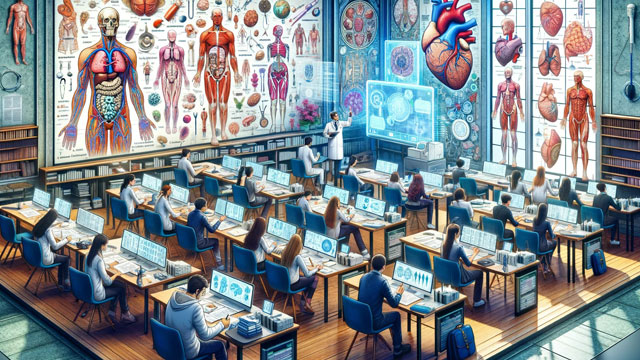
Each lesson has been meticulously designed to cater to learners of all levels. Whether you're a college student looking for a comprehensive academic resource, a pre-college student aiming to get a head start, or an avid learner keen on understanding the world around you, this course promises an enlightening experience. The content is complemented by vivid diagrams, stimulating assignments, comprehensive review exams, and a plethora of additional resources to enhance your learning journey.
Our course doesn't merely inform – it engages. Critical thinking assignments challenge you to apply what you've learned, fostering a deeper understanding of the subject. The self-paced nature ensures you can progress at your comfort, making learning both flexible and enjoyable.
Biology 101 serves as both a standalone comprehensive guide to the biological world and a personalized tutor to assist in revisiting concepts. The beauty of life is in its details, its broad strokes, and the interconnectedness of it all. With Biology 101, you're not just learning about life; you're experiencing the very essence of it.
Embark on this exhilarating journey with us. Explore, discover, and marvel at the wonders of the living world. Biology 101 is more than a course; it's an adventure waiting to be embarked upon!
Course Motivation
By definition, biology is the science of life or living matter in all its many forms and phenomena. It takes a look at issues like the origins of life, growth and development, reproduction and structure.
Biology is further broken down into many different specialized fields, like microbiology, cellular biology, etc.
Its also served as the arena for a great deal of controversy and debate such as Darwinism vs. Intelligent Design and the like.
Unfortunately, the "science" of it has the potential to scare some people away. Admittedly, being such a huge branch of science, it has the potential to be intimidating. However, if you can break biology down to its basics, and use that as a solid foundation on which to build upon, you'll never have to cower in confusion again!
Enrollment's always open and the materials and lessons are available 24/7.
Biology 101 is an ideal course for college and pre-college students looking for a logical and easy to understand class in a self-paced learning environment. This course is additionally strengthened by integrating clear, well written text, a host of diagrams and pictures, critical thinking assignments and comprehensive lesson reviews and exams for each lesson.
Of course, high school and college students aren't the only people who stand to benefit from this course. Successful completion doesn't require any previous medical or scientific background. In fact, anyone over the age of 13 years is encouraged to enroll.
You'll begin with an introduction to the science of biology and progress through the related chemistry, studying cells, taking a look at the science of genetics and the principles of evolution, plant life, animal life and the delicate system of ecology.
Even better, you won't have to spend an arm and a leg on textbooks or other materials. This class was designed as a stand-alone platform which covers all the major concepts of biology. Everything that you'll need in order to succeed is provided for you immediately upon enrollment. So, not only will you save time in the self-paced environment, you'll also be able to save money as well.
Grades are awarded based on your performance on each of the lessons multiple choice and true or false quizzes (which are worth between 20 and 25 points each). A few lessons will also include a short assignment that is based on lesson facts and opinions that were expressed. You'll need to maintain an average grade of 70% throughout the class in order for successful course completion.
By the time the class is over, you'll have gained a solid and clear understanding of the very science of our existence. You will be well equipped to further your studies in other scientific arenas as well.
While traditional classroom settings demand that you wait for a new quarter or semester to enroll, those delays are moot here. Class enrollment is open and available 24 hours a day, 7 days a week, so there is no reason you can't act now to gain a competitive edge at school or in the workplace.
- Completely Online
- Self-Paced
- 6 Months to Complete
- 24/7 Availability
- Start Anytime
- PC & Mac Compatible
- Android & iOS Friendly
- Accredited CEUs
Course Lessons


Lesson 1: Introduction to the Study of Biology
 Lesson 1 Video
 Lesson discussions: Reasons for Taking this Course
 Complete Assignment: Why this Course?
- Assessment: Introduction to the Study of Biology Exam
Lesson 2: Scientific Method
- Lesson 2 Video
- Assessment: The Scientific Method Exam
Lesson 3: Characteristics of Living Things
- Lesson 3 Video
- Assessment: Characteristics of Living Things Exam
Lesson 4: The Role of Chemistry in Biology
- Lesson 4 Video
- Assessment: The Role of Chemistry in Biology Exam
Lesson 5: Chemistry Basics
- Lesson 5 Video
- Assessment: Chemistry Basics Exam
Lesson 6: Biochemistry and other Bio-Sciences
- Lesson 6 Video
- Assessment: Biochemistry and other Bio-Sciences Exam
Lesson 7: Comparison of Prokaryotic and Eukaryotic Cell Structures
- Lesson 7 Video
- Assessment: Comparison of Prokaryotic and Eukaryotic Cell Structures Exam
Lesson 8: Energy Conversion in Eukaryotic Cells
- Lesson 8 Video
- Assessment: Energy Conversion in Eykaryotic Cells Exam
Lesson 9: Mendel's Laws and Modern Genetic Terminology
- Lesson 9 Video
- Assessment: Mendel's Laws and Modern Genetic Terminology Exam
Lesson 10: Patterns of Inheritance
- Lesson 10 Video
- Assessment: Patterns of Inheritance Exam
Lesson 11: Molecular Genetics
- Lesson 11 Video
- Assessment: Molecular Genetics Exam
Lesson 12: How DNA and RNA Work
- Lesson 12 Video
- Assessment: How DNA and RNA Work Exam
Lesson 13: Why Genes Matter to You
- Lesson 13 Video
- Assessment: Why Genes Matter to You Exam
Lesson 14: Introduction to the Study of the Origins of Life
- Lesson 14 Video
- Assessment: Origins of Life Exam
Lesson 15: Fundamentals of Life Origins
- Lesson 15 Video
- Assessment: Fundamentals Exam
Lesson 16: Other Considerations in the Search of Life
- Lesson 16 Video
- Assessment: Other Considerations Exam
- Assessment: MidTerm Exam
Lesson 17: The Development of an Evolutionary Principle: A Selective Overview of the History
- Lesson 17 Video
- Assessment: The Development of an Evolutionary Principle Exam
Lesson 18: How Evolution Works
- Lesson 18 Video
- Assessment: How Evolution Works Exam
Lesson 19: Speciation
- Lesson 19 Video
- Assessment: Speciation Exam
Lesson 20: Accompanying Evolutionary Concepts
- Lesson 20 Video
- Assessment: Accompanying Evolutionary Concepts Exam
Lesson 21: Modern Evidence for Evolution and Common Ancestry
- Lesson 21 Video
- Assessment: Modern Evidence for Evolution and Common Ancestry Exam
Lesson 22: Why We're Here Today
- Lesson 22 Video
- Assessment: Why We're Here Today Exam
Lesson 23: Dynamics of Population
- Lesson 23 Video
Lesson 24: Human Population Dynamics
- Lesson 24 Video
Lesson 25: Ecosystem Structure
- Lesson 25 Video
- Assessment: Ecosystem Structure Exam
Lesson 26: The Flow of Energy in Ecosystems
- Lesson 26 Video
- Assessment: The Flow of Energy in Ecosystems Exam
Lesson 27: Major Ecosystems
- Lesson 27 Video
- Assessment: Major Ecosystems Exam
Lesson 28: Biochemical Cycles
- Lesson 28 Video
- Assessment: Biochemical Cycles Exam
Lesson 29: Succession
- Lesson 29 Video
- Assessment: Succession Exam
Lesson 30: Other Topics in Ecology
- Lesson 30 Video
- Lesson discussions: Final Course Poll - Your Opinion; Program Evaluation Follow-up Survey (End of Course); Course Comments
- Assessment: Other Topics in Ecology Exam
- Assessment: Final Exam
Learning Outcomes
- Describe the study of biology.
- Define scientific method.
- Define characteristics of living things.
- Define the role of chemistry in biology.
- Describe chemistry basics.
- Summarize biochemistry and other bio-sciences.
- Recognize the comparison of prokaryotic and eukaryotic cell structures.
- Describe energy conversion in eukaryotic cells.
- Define Mendel's Laws and modern genetic terminology.
- Describe patterns of inheritance.
- Describe molecular genetics how DNA and RNA work.
- Determine why genes matter to you.
- Summarize study of the origins of life.
- Describe other considerations in the search of life.
- Summarize the development of an evolutionary principle.
- Describe how evolution works.
- Define speciation.
- Describe dynamics of population.
- Identify human population dynamics.
- Describe ecosystem structure.
- Define major ecosystems.
- Summarize biochemical cycles and succession.
- Demonstrate mastery of lesson content at levels of 70% or higher.
Additional Course Information
- Document Your Lifelong Learning Achievements
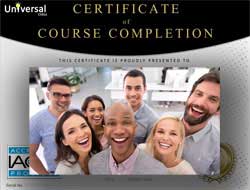
- Earn an Official Certificate Documenting Course Hours and CEUs
- Verify Your Certificate with a Unique Serial Number Online
- View and Share Your Certificate Online or Download/Print as PDF
- Display Your Certificate on Your Resume and Promote Your Achievements Using Social Media

Choose Your Subscription Plan
No Certificate / No CEUs
This course only
| Includes certificate | X |
| Includes CEUs | X |
| Self-paced |

|
| Instructor support |
|
| Time to complete | 6 months |
| No. of courses | 1 course |
Certificate & CEUs
This course only
| Includes certificate |
|
| Includes CEUs |
|
| Self-paced |
|
| Instructor support |
|
| Time to complete | 6 months |
| No. of courses | 1 course |
Certificates & CEUs
Includes all 600+ courses
| Includes certificate |
|
| Includes CEUs |
|
| Self-paced |
|
| Instructor support |
|
| Time to complete | 12 Months |
| No. of courses | 600+ |
Certificates & CEUs
Includes all 600+ courses
| Includes certificate |
|
| Includes CEUs |
|
| Self-paced |
|
| Instructor support |
|
| Time to complete | 24 Months |
| No. of courses | 600+ |
Student Testimonials
- "Instructor was great, and I learned a great deal on the course. I didn't have many issues with it, and overall I leaned a lot." -- Justine C.
- "A helpful instructor who provided a quick turnaround when grading assignments." -- Frieda F.
Related Courses
-
 74 hours
7.4 CEUs
Medical Billing and Coding Course Bundle
+ More Info
74 hours
7.4 CEUs
Medical Billing and Coding Course Bundle
+ More Info
-
 6 hours
0.6 CEUs
HIPAA Compliance 101
+ More Info
6 hours
0.6 CEUs
HIPAA Compliance 101
+ More Info
-
 30 hours
3.0 CEUs
Microbiology 101
+ More Info
30 hours
3.0 CEUs
Microbiology 101
+ More Info
-
 9 hours
0.9 CEUs
Meteorology Fundamentals
+ More Info
9 hours
0.9 CEUs
Meteorology Fundamentals
+ More Info
-
 18 hours
1.8 CEUs
Introduction to Cell and Molecular Biology
+ More Info
18 hours
1.8 CEUs
Introduction to Cell and Molecular Biology
+ More Info
-
 20 hours
2.0 CEUs
Chemistry 101
+ More Info
20 hours
2.0 CEUs
Chemistry 101
+ More Info
-
 8 hours
0.8 CEUs
Geology 101
+ More Info
8 hours
0.8 CEUs
Geology 101
+ More Info
-
 7 hours
0.7 CEUs
History of the Universe
+ More Info
7 hours
0.7 CEUs
History of the Universe
+ More Info
-
 7 hours
0.7 CEUs
Understanding Concussions
+ More Info
7 hours
0.7 CEUs
Understanding Concussions
+ More Info
-
 7 hours
0.7 CEUs
How to Run a Dog Day Care
+ More Info
7 hours
0.7 CEUs
How to Run a Dog Day Care
+ More Info
-
 7 hours
0.7 CEUs
Geography 101
+ More Info
7 hours
0.7 CEUs
Geography 101
+ More Info
Loading...


Follow Us Online