
Online Class: Anatomy and Physiology 101
no certificate
with CEU Certificate*
-
17Lessons
-
32Exams &
Assignments -
9,001Students
have taken this course -
21Hours
average time -
2.1CEUs
Course Description
Deep Dive into Human Anatomy & Physiology: A Comprehensive Online Course
The human body, an intricate tapestry of cells, tissues, organs, and organ systems, is nothing short of a marvel. Its complexity and precision have fascinated scientists, doctors, and curious minds for centuries. To truly appreciate the magic within us, one must understand both the structural (anatomy) and functional (physiology) aspects of the human body. If you've ever wondered how we breathe, how our heartbeats, or how our muscles contract, you're about to embark on an enlightening journey.
Why Study Anatomy & Physiology?
As we progress into an age where medical advancements are at the forefront, a foundational knowledge of human anatomy and physiology is more crucial than ever. Whether you're aiming for a healthcare career, preparing for advanced studies in the field of science, or simply nurturing a personal interest, a profound understanding of how the human body operates is indispensable.
Our self-paced online course offers a thorough yet accessible dive into the essentials of human anatomy and physiology. Crafted with care, the content not only caters to aspiring professionals but also to anyone keen on understanding the miracles of the human body.
Course Overview:
-
Lesson 1: Introduction to Anatomy and Physiology Delve into the basic principles and the significance of studying the human body.
-
Lesson 2: Chemistry Basics Explore the chemical building blocks of life and their role in bodily functions.
-
Lesson 3: Cells - The Foundation of Life Uncover the mysteries of cellular structures, their functions, and their critical role in maintaining life.
-
Lesson 4: Tissues (Different Types and Functions) Understand the various tissue types and how they collaborate to ensure the body's optimal functioning.
-
Lesson 5 to 16: Dive into specific systems of the body, from the protective Integumentary System to the intricate Reproductive System. Each lesson is designed to provide a holistic view, highlighting the anatomy of each system, its physiological functions, inter-system relationships, and its importance in maintaining homeostasis.
For example, in Lesson 9: The Sensory System, you'll not only learn about the anatomy of the eyes and ears but also delve into the intricate processes that allow us to see and hear. How does the brain interpret various stimuli? What makes certain sounds more pleasant than others? Such intriguing questions and more will be answered.
Engaging Learning Methods:
Each lesson is enriched with activities and interactive assessments to enhance the learning experience.
Final Assessment:
Your understanding and retention will be tested in the Final Exam, ensuring you leave the course with a solid grasp of all the key concepts.
Embark on a Fascinating Journey:
With this course, you don't just learn; you explore, discover, and marvel at the intricacies of the human body. Whether you're a student, an educator, a healthcare enthusiast, or simply a curious soul, this course promises to enlighten and inspire. Dive into the world of human anatomy and physiology and unravel the mysteries that lie within us all. Join us on this academic adventure, and empower yourself with knowledge that will last a lifetime.
Who should take this course?
Does this course have assignments and exams that are graded?
What exactly does this anatomy and physiology course cover?
I'm interested in medical billing and coding, should I take this course as well?
I'm interesting in purchasing this course for my medical/paramedic/nursing/physician assistant/etc. program. How do I go about doing this?
Is there an instructor I can contact should I have a question about the course material?
Will this course work on my smartphone/mobile device?
What kind of documentation do I get after completing this course?


Course Motivation
Gaining a basic understanding of these two sciences will provide you with a much more intimate understanding of not only our own bodies, but also the make up of many other plants and animals in the world around us.
However, to offer a real comprehensive study, this course will focus on the human "organism", covering the major systems as they work together to keep our bodies functioning properly.
The beauty of this class is that the course instructor provides a fantastic foundation for any number of potential scenarios.
Situations such as high school and college students who need to improve their grades or grasp of Anatomy and Physiology, or even adults and professionals considering making a career change into the medical or biological sectors.
In all honesty, this course is ideal for anyone out there who wants to gain a deeper understanding of how their bodies work, and of course, reasons why our bodies sometimes DON'T work.
Regardless of why you want to learn more about anatomy and physiology, you're all out of excuses for procrastination. Enrollment is always open and the instructor is frequently online to respond to any of your questions or concerns.
Gaining a basic understanding of these two sciences will provide you with a much more intimate understanding of not only our own bodies, but also the make up of many other plants and animals in the world around us.
However, to offer a real comprehensive study, this course will focus on the human "organism", covering the major systems as they work together to keep our bodies functioning properly.
The beauty of this class is that the course instructor provides a fantastic foundation for any number of potential scenarios.
Situations such as high school and college students who need to improve their grades or grasp of Anatomy and Physiology, or even adults and professionals considering making a career change into the medical or biological sectors.
In all honesty, this course is ideal for anyone out there who wants to gain a deeper understanding of how their bodies work, and of course, reasons why our bodies sometimes DON'T work.
Regardless of why you want to learn more about anatomy and physiology, you're all out of excuses for procrastination. Enrollment is always open and the instructor is frequently online to respond to any of your questions or concerns.
- Completely Online
- Self-Paced
- Printable Lessons
- Full HD Video

- 6 Months to Complete
- 24/7 Availability
- Start Anytime
- PC & Mac Compatible
- Android & iOS Friendly
- Accredited CEUs
Course Lessons


Lesson 1. Introduction to Anatomy and Physiology
 Lesson 1 Video
 Review Practice Worksheet: optional-WordSearch-Activity-7064.pdf
 Lesson discussions: Reasons for Taking this Course
 Complete Assignment: Introduce Yourself
- Complete: Introduction to Anatomy and Physiology Assignment
- Assessment: Introduction to Anatomy and Physiology Quiz
Lesson 2. Chemistry Basics
- Lesson 2 Video
- Review Practice Worksheet: optional-WordSearch-Activity-7065.pdf
- Complete Assignment: Review of Basic Chemistry
- Assessment: Basic Chemistry Quiz
Lesson 3. Cells - The Foundation of Life
- Lesson 3 Video
- Review Practice Worksheet: optional-WordSearch-Activity-7066.pdf
- Complete Assignment: Review of Cells
- Assessment: Cells Quiz
Lesson 4. Tissues (Different Types and Functions)
- Lesson 4 Video
- Review Practice Worksheet: optional-WordSearch-Activity-7067.pdf
- Complete Assignment: Review of Tissues
- Assessment: Tissue Quiz
Lesson 5. The Integumentary System
- Lesson 5 Video
- Review Practice Worksheet: optional-WordSearch-Activity-7068.pdf
- Complete: The Integumentary System Assignment
- Assessment: The Integumentary System
Lesson 6. The Skeletal System
- Lesson 6 Video
- Review Practice Worksheet: optional-WordSearch-Activity-7069.pdf
- Complete: The Skeletal System Assignment
- Assessment: The Skeletal System
Lesson 7. The Muscular System
- Lesson 7 Video
- Review Practice Worksheet: optional-WordSearch-Activity-7070.pdf
- Complete: The Muscular System Assignment
- Assessment: The Muscular System
Lesson 8. The Nervous System
- Lesson 8 Video
- Review Practice Worksheet: optional-WordSearch-Activity-7071.pdf
- Complete: The Nervous System Assignment
- Assessment: The Nervous System
Lesson 9. The Sensory System
- Lesson 9 Video
- Review Practice Worksheet: optional-WordSearch-Activity-7072.pdf
- Complete: The Sensory System Assignment
- Assessment: The Sensory System
Lesson 10. The Endocrine System
- Lesson 10 Video
- Review Practice Worksheet: optional-WordSearch-Activity-7073.pdf
- Complete: The Endocrine System Assignment
- Assessment: The Endocrine System
Lesson 11. The Cardiovascular System
- Lesson 11 Video
- Review Practice Worksheet: optional-WordSearch-Activity-7074.pdf
- Complete: The Cardiovascular System Assignment
- Assessment: The Cardiovascular System
Lesson 12. The Lymphatic System
- Lesson 12 Video
- Review Practice Worksheet: optional-WordSearch-Activity-7075.pdf
- Complete Assignment: The Lymphatic System
- Assessment: The Lymphatic System
Lesson 13. The Respiratory System
- Lesson 13 Video
- Review Practice Worksheet: optional-WordSearch-Activity-7076.pdf
- Complete: The Respiratory System Assignment
- Assessment: The Respiratory System
Lesson 14. The Digestive System
- Lesson 14 Video
- Review Practice Worksheet: optional-WordSearch-Activity-7077.pdf
- Complete: The Digestive System Assignment
- Assessment: The Digestive System
Lesson 15. The Urinary System
- Lesson 15 Video
- Review Practice Worksheet: optional-WordSearch-Activity-7078.pdf
- Assessment: The Urinary System
Lesson 16. The Reproductive System
- Lesson 16 Video
- Review Practice Worksheet: optional-WordSearch-Activity-7079.pdf
- Lesson discussions: End of Class Poll
- Assessment: The Reproductive System
The Final Exam
- Lesson discussions: End of Course Poll; Program Evaluation Follow-up Survey (End of Course); Course Comments
- Assessment: The Final Exam
Learning Outcomes
- Define anatomy and physiology.
- Know the chemistry behind anatomy and physiology.
- Describe cells - the foundation of life.
- Describe tissues (different types and functions).
- Describe and recognize all parts of the integumentary system.
- Recognize the important parts of the skeletal system, muscular system, nervous system, and sensory system.
- Summarize the major parts of the endocrine system.
- Recognize the major parts of the cardiovascular system, lymphatic system, and the respiratory system.
- Summarize the major components of the digestive system, urinary system, and the reproductive system.
- Demonstrate mastery of lesson content at levels of 70% or higher.
Additional Course Information
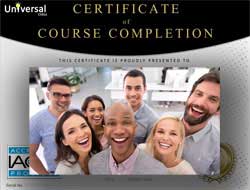
- Document Your Lifelong Learning Achievements
- Earn an Official Certificate Documenting Course Hours and CEUs
- Verify Your Certificate with a Unique Serial Number Online
- View and Share Your Certificate Online or Download/Print as PDF
- Display Your Certificate on Your Resume and Promote Your Achievements Using Social Media
Choose Your Subscription Plan
No Certificate / No CEUs
This course only
| Includes certificate | X |
| Includes CEUs | X |
| Self-paced |

|
| Instructor support |
|
| Time to complete | 6 months |
| No. of courses | 1 course |
Certificate & CEUs
This course only
| Includes certificate |
|
| Includes CEUs |
|
| Self-paced |
|
| Instructor support |
|
| Time to complete | 6 months |
| No. of courses | 1 course |
Certificates & CEUs
Includes all 600+ courses
| Includes certificate |
|
| Includes CEUs |
|
| Self-paced |
|
| Instructor support |
|
| Time to complete | 12 Months |
| No. of courses | 600+ |
Certificates & CEUs
Includes all 600+ courses
| Includes certificate |
|
| Includes CEUs |
|
| Self-paced |
|
| Instructor support |
|
| Time to complete | 24 Months |
| No. of courses | 600+ |
Student Testimonials
- "Amazing course! I used this as a refresher (I took Anatomy several years ago in college). The videos are direct and spot-on. Really appreciated also being able to print out the lesson materials with concise definitions linked to associated pictures. I was able to retain so much more information than any lecture or textbook out there. What a great learning resource! Great job!" -- Eric S.
- "This was the most comprehensive course on human anatomy and physiology. Thank you!" -- Vita S.
- "I appreciate the opportunity to complete this course; I consider this A&P course extremely helpful." -- Michele P.
- "This course was insightful and really helped me learn more about A&P." -- Zachary M.
- "I am thankful it was smooth and she gave great advice on studying." -- Bobbie W.
- "I enjoyed this course and gained a lot of knowledge and understanding!" -- Dustin B.
- "Thank you once again for all you help, time, energy and wisdom! I will be forever grateful for this terrific learning experience! Thank you, thank you, thank you!" -- Ami A.
- "These courses I took were great because I don't have much time with work to got to school. I could take my time doing the courses I took...and it was such a wonderful laid out course." -- Georgina K.
- "This course was an excellent learning experience for me. I never studied anatomy and physiolgy in school so it was a challenge for me. I enjoyed the feedback by the instructors who seem very knowledgeable." -- Michael I.
- "I found every lesson very helpful. All the lessons were broken down to layman's term to better understand each part associated with it." -- Michael I.
Related Courses
-
 6 hours
0.6 CEUs
HIPAA Compliance 101
+ More Info
6 hours
0.6 CEUs
HIPAA Compliance 101
+ More Info
-
 17 hours
1.7 CEUs
Introduction to Medical Billing
+ More Info
17 hours
1.7 CEUs
Introduction to Medical Billing
+ More Info
-
 14 hours
1.4 CEUs
Medical Terminology for Medical Coders
+ More Info
14 hours
1.4 CEUs
Medical Terminology for Medical Coders
+ More Info
-
 20 hours
2.0 CEUs
CPT Coding for Beginners
+ More Info
20 hours
2.0 CEUs
CPT Coding for Beginners
+ More Info
-
 10 hours
1.0 CEUs
Understanding Addictions
+ More Info
10 hours
1.0 CEUs
Understanding Addictions
+ More Info
-
 30 hours
3.0 CEUs
Microbiology 101
+ More Info
30 hours
3.0 CEUs
Microbiology 101
+ More Info
-
 10 hours
1.0 CEUs
Healthcare Code and Conduct
+ More Info
10 hours
1.0 CEUs
Healthcare Code and Conduct
+ More Info
-
 5 hours
0.5 CEUs
End of Life Care
+ More Info
5 hours
0.5 CEUs
End of Life Care
+ More Info
-
 7 hours
0.7 CEUs
Understanding Concussions
+ More Info
7 hours
0.7 CEUs
Understanding Concussions
+ More Info
-
 35 hours
3.5 CEUs
Biology 101
+ More Info
35 hours
3.5 CEUs
Biology 101
+ More Info
-
 22 hours
2.2 CEUs
Medical Abbreviations
+ More Info
22 hours
2.2 CEUs
Medical Abbreviations
+ More Info
-
 2 hours
0.2 CEUs
Careers in Healthcare
+ More Info
2 hours
0.2 CEUs
Careers in Healthcare
+ More Info
-
 20 hours
2.0 CEUs
Chemistry 101
+ More Info
20 hours
2.0 CEUs
Chemistry 101
+ More Info
-
 8 hours
0.8 CEUs
Medical Office Administrative Operations
+ More Info
8 hours
0.8 CEUs
Medical Office Administrative Operations
+ More Info
-
 33 hours
3.3 CEUs
Comprehensive Medical Terminology 1 & 2
+ More Info
33 hours
3.3 CEUs
Comprehensive Medical Terminology 1 & 2
+ More Info
-
 17 hours
1.7 CEUs
ICD-10: Medical Coding
+ More Info
17 hours
1.7 CEUs
ICD-10: Medical Coding
+ More Info
Loading...



Follow Us Online