
Online Class: ABCs of Technical Writing

no certificate
with CEU Certificate*
-
11Lessons
-
16Exams &
Assignments -
3,425Students
have taken this course -
9Hours
average time -
0.9CEUs
Course Description
Demystifying Technical Writing: A Comprehensive Guide
In our technologically-driven world, the ability to convey complex concepts in a clear, concise, and accessible manner is invaluable. Have you ever grappled with assembling a piece of furniture, only to find relief in the user-friendly guide accompanying it? Or perhaps you've navigated a new software application with the aid of an intuitive online help system? These are tangible examples of technical writing, a discipline that bridges the gap between technical experts and the general public.
Course Overview:
Technical writing operates at the intersection of technology and communication. It's a discipline that involves crafting detailed, user-friendly content, whether it's for product manuals, online help systems, or instructional videos. As technology permeates every sector, from healthcare to finance, and from entertainment to agriculture, the demand for skilled technical writers has surged.
Whether you're a professional in a tech-centric industry, a writing enthusiast with a penchant for technology, or someone intrigued by the prospect of a career in technical writing, this course offers a comprehensive introduction to the multifaceted world of technical writing.
Course Highlights:
-
What is Technical Writing? Delve into the core principles of technical writing, exploring its significance and wide-ranging applications.
-
Projects for Technical Writers: A deep dive into the myriad projects that a technical writer might undertake, from creating user manuals to designing interactive tutorials.
-
The Technical Writing Process: A step-by-step guide on structuring, drafting, and refining technical documents.
-
How to Write Effectively: Techniques and strategies to ensure clarity, precision, and user-friendliness in your writing.
-
Teaching an Alien to Drive: An engaging exercise that challenges you to explain a familiar concept to an unfamiliar audience, emphasizing the importance of perspective in technical writing.
-
The First End User, You: The significance of self-review and experiencing the user's journey firsthand.
-
Getting It Done: Discover how project management skills are integral to a technical writer's success.
-
Words, Pictures, and Links: Explore the diverse formats in which technical content can be presented, from written documents to multimedia.
-
Breaking into Technical Writing: Tips and guidance for those eager to launch a career in technical writing.
-
The Tech Writer's Toolbox: A compilation of essential tools, software, and resources that can elevate the quality of your work.
-
Staying in Touch: Emphasizing the importance of continuous learning and staying updated in this ever-evolving field.
Real-World Implications:
Consider the launch of a revolutionary health-monitoring app. While developers focus on coding and design, it's the technical writer's responsibility to ensure that users can seamlessly navigate the app, understand its features, and utilize it effectively. This might involve creating a detailed FAQ section, interactive video tutorials, or a comprehensive user guide.
Who is this Course For?
-
Industry Professionals: Enhance your ability to communicate intricate technical details to clients, stakeholders, and non-technical colleagues.
-
Aspiring Writers: Cultivate a specialized skill set that's in high demand across a spectrum of industries.
-
Career Changers: Looking for a dynamic, rewarding career? Delve into technical writing and discover a world where technology meets creativity.
In conclusion, as we progress further into a technology-dominated era, the role of a technical writer becomes increasingly central. This course promises not only to introduce you to the foundational concepts of technical writing but also to equip you with practical skills and insights that are immediately applicable in the real world. Dive in, and unravel the art and science of technical writing!



Course Motivation
Some of the fields in which technical writing is commonly needed include the computer and software industries, the consumer and industrial electronics industries, the medical and healthcare fields, and any other area where technical information needs to be disseminated in a readable and understandable form. In the United States and other developed countries, where knowledge industries, whose primary products are information based, companies are faced with the task of organizing and maintaining vast knowledge banks and databases. Companies like Google, for instance, do not produce products but instead package information in useful, usable forms. New content management systems and knowledge management systems are being designed to help companies manage their informational assets. In many cases, technical writers are moving into these roles as well.
Technical Writer or Technical Communicator?
Technical Writing, A Viable Career?
- Completely Online
- Self-Paced
- 6 Months to Complete
- 24/7 Availability
- Start Anytime
- PC & Mac Compatible
- Android & iOS Friendly
- Accredited CEUs
Course Lessons


Lesson 1. What is Technical Writing?
 Lesson 1 Video
 Lesson discussions: Reasons for Taking this Course
 Complete: Assignment - Lesson 1
- Complete Assignment: An Introduction
- Assessment: Lesson 1: What is Technical Writing?
Lesson 2. Projects for Technical Writers
- Lesson 2 Video
- Lesson discussions: Imagination Rules
- Assessment: Lesson 2: Projects for Technical Writers
Lesson 3. The Technical Writing Process
- Lesson 3 Video
- Assessment: Lesson 3: The Technical Writing Process
Lesson 4. How to Write Effectively
- Lesson 4 Video
- Complete: Assignment - Lesson 4
- Assessment: Lesson 4: How to Write Effectively
Lesson 5. Teaching an Alien to Drive
- Lesson 5 Video
- Assessment: Lesson 5: Teaching an Alien to Drive
Lesson 6. The First End User, You
- Lesson 6 Video
- Lesson discussions: What Type of Learner are You?
- Assessment: Lesson 6: The First End User: You
Lesson 7. Getting It Done. Project Management and the Technical Writer
- Lesson 7 Video
- Assessment: Lesson 7: Getting It Done: Project Management and the Technical Writer
Lesson 8. Words, Pictures, and Links. The Growing Array of Deliverable Formats
- Lesson 8 Video
- Assessment: Lesson 8: Words, Pictures, and Links: The Growing Array of Deliverable Formats
Lesson 9. Breaking into Technical Writing
- Lesson 9 Video
- Complete: Assignment - Lesson 9
- Assessment: Lesson 9: Breaking into Technical Writing
Lesson 10. The Tech Writer's Toolbox
- Lesson 10 Video
- Lesson discussions: Language Basics
- Assessment: Lesson 10: The Tech Writer's Toolbox
Lesson 11. Staying in Touch
- Lesson 11 Video
- Lesson discussions: How would you rate this course?; Program Evaluation Follow-up Survey (End of Course); Course Comments
- Assessment: Lesson 11: Staying in Touch
- Assessment: Technical Writing - Final Exam
Learning Outcomes
- Identify what technical writing is.
- Identify the types of projects that require technical writers.
- Summarize the technical writing process.
- Write technical materials more effectively.
- Write with the end-user in mind, and not the product owner.
- Demonstrate time management skills to complete a project.
- Evaluate your technical writing.
- Identify the best resources for finding technical writing projects.
- Demonstrate mastery of lesson content at levels of 70% or higher.
Additional Course Information
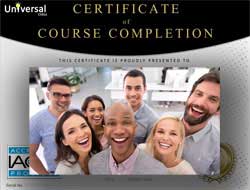
- Document Your Lifelong Learning Achievements
- Earn an Official Certificate Documenting Course Hours and CEUs
- Verify Your Certificate with a Unique Serial Number Online
- View and Share Your Certificate Online or Download/Print as PDF
- Display Your Certificate on Your Resume and Promote Your Achievements Using Social Media

Choose Your Subscription Plan
No Certificate / No CEUs
This course only
| Includes certificate | X |
| Includes CEUs | X |
| Self-paced |

|
| Instructor support |
|
| Time to complete | 6 months |
| No. of courses | 1 course |
Certificate & CEUs
This course only
| Includes certificate |
|
| Includes CEUs |
|
| Self-paced |
|
| Instructor support |
|
| Time to complete | 6 months |
| No. of courses | 1 course |
Certificates & CEUs
Includes all 600+ courses
| Includes certificate |
|
| Includes CEUs |
|
| Self-paced |
|
| Instructor support |
|
| Time to complete | 12 Months |
| No. of courses | 600+ |
Certificates & CEUs
Includes all 600+ courses
| Includes certificate |
|
| Includes CEUs |
|
| Self-paced |
|
| Instructor support |
|
| Time to complete | 24 Months |
| No. of courses | 600+ |
Student Testimonials
- "Great course and nice instruction." -- David M.
- "The lessons were very clear and helpful." -- Julianna Z.
- "The instructor was so helpful." -- Anchal N.
- "I really enjoyed working with the instructor. I found the writing assignments most helpful. Practicing specific writing skills is the best way to learn technical writing." -- Paul S.
- "Excellent!" -- Jeannine S.
- "It was a good overview, which is exactly what I was looking for. I enjoyed your classes. Thank you." -- Beth B.
- "Everything was great." -- Nancy M.
Related Courses
-
 87 hours
8.7 CEUs
Writing Help Course Bundle
+ More Info
87 hours
8.7 CEUs
Writing Help Course Bundle
+ More Info
-
 8 hours
0.8 CEUs
Strategic Planning
+ More Info
8 hours
0.8 CEUs
Strategic Planning
+ More Info
-
 22 hours
2.2 CEUs
Novel Writing 101
+ More Info
22 hours
2.2 CEUs
Novel Writing 101
+ More Info
-
 5 hours
0.5 CEUs
Writing the Great American Short Story
+ More Info
5 hours
0.5 CEUs
Writing the Great American Short Story
+ More Info
-
 5 hours
0.5 CEUs
The Art of Setting Goals
+ More Info
5 hours
0.5 CEUs
The Art of Setting Goals
+ More Info
-
 5 hours
0.5 CEUs
Team Building 101
+ More Info
5 hours
0.5 CEUs
Team Building 101
+ More Info
-
 9 hours
0.9 CEUs
Mystery Writing
+ More Info
9 hours
0.9 CEUs
Mystery Writing
+ More Info
-
 17 hours
1.7 CEUs
Poetry Writing 101
+ More Info
17 hours
1.7 CEUs
Poetry Writing 101
+ More Info
-
 7 hours
0.7 CEUs
Spelling 101
+ More Info
7 hours
0.7 CEUs
Spelling 101
+ More Info
-
 9 hours
0.9 CEUs
ABCs of Technical Writing
+ More Info
9 hours
0.9 CEUs
ABCs of Technical Writing
+ More Info
-
 7 hours
0.7 CEUs
Organizational Behavior in Business
+ More Info
7 hours
0.7 CEUs
Organizational Behavior in Business
+ More Info
-
 8 hours
0.8 CEUs
Procurement Management
+ More Info
8 hours
0.8 CEUs
Procurement Management
+ More Info
-
 12 hours
1.2 CEUs
Advertising, Marketing and Sales Writing
+ More Info
12 hours
1.2 CEUs
Advertising, Marketing and Sales Writing
+ More Info
-
 7 hours
0.7 CEUs
Introduction to Ethics
+ More Info
7 hours
0.7 CEUs
Introduction to Ethics
+ More Info
-
 5 hours
0.5 CEUs
Basic Research Skills
+ More Info
5 hours
0.5 CEUs
Basic Research Skills
+ More Info
-
 11 hours
1.1 CEUs
Essay Writing 101
+ More Info
11 hours
1.1 CEUs
Essay Writing 101
+ More Info
-
 11 hours
1.1 CEUs
English Composition 101
+ More Info
11 hours
1.1 CEUs
English Composition 101
+ More Info
-
 12 hours
1.2 CEUs
Paranormal Romance Writing
+ More Info
12 hours
1.2 CEUs
Paranormal Romance Writing
+ More Info
-
 19 hours
1.9 CEUs
Creative Writing 101
+ More Info
19 hours
1.9 CEUs
Creative Writing 101
+ More Info
-
 11 hours
1.1 CEUs
Writing Effective Emails in the Workplace
+ More Info
11 hours
1.1 CEUs
Writing Effective Emails in the Workplace
+ More Info
-
 6 hours
0.6 CEUs
English Grammar Level 3
+ More Info
6 hours
0.6 CEUs
English Grammar Level 3
+ More Info
-
 6 hours
0.6 CEUs
Goal Setting for Business
+ More Info
6 hours
0.6 CEUs
Goal Setting for Business
+ More Info
-
 14 hours
1.4 CEUs
Creative Writing for Beginners
+ More Info
14 hours
1.4 CEUs
Creative Writing for Beginners
+ More Info
-
 5 hours
0.5 CEUs
Habits of Millionaires
+ More Info
5 hours
0.5 CEUs
Habits of Millionaires
+ More Info
-
 14 hours
1.4 CEUs
Journalism 101
+ More Info
14 hours
1.4 CEUs
Journalism 101
+ More Info
-
 9 hours
0.9 CEUs
Nonfiction Writing 101
+ More Info
9 hours
0.9 CEUs
Nonfiction Writing 101
+ More Info
-
 6 hours
0.6 CEUs
Freelance Writing 101
+ More Info
6 hours
0.6 CEUs
Freelance Writing 101
+ More Info
-
 5 hours
0.5 CEUs
Kaizen 101 - An Introduction
+ More Info
5 hours
0.5 CEUs
Kaizen 101 - An Introduction
+ More Info
-
 23 hours
2.3 CEUs
Historical Fiction Writing
+ More Info
23 hours
2.3 CEUs
Historical Fiction Writing
+ More Info
-
 7 hours
0.7 CEUs
Writing Women's Fiction
+ More Info
7 hours
0.7 CEUs
Writing Women's Fiction
+ More Info
-
 10 hours
1.0 CEUs
Travel Writing 101
+ More Info
10 hours
1.0 CEUs
Travel Writing 101
+ More Info
-
 12 hours
1.2 CEUs
How to Write Case Studies
+ More Info
12 hours
1.2 CEUs
How to Write Case Studies
+ More Info
-
 29 hours
2.9 CEUs
Writing Basics 101: Spelling, Grammar, Punctuation, Writing Structures
+ More Info
29 hours
2.9 CEUs
Writing Basics 101: Spelling, Grammar, Punctuation, Writing Structures
+ More Info
-
 8 hours
0.8 CEUs
Marketing Copywriter 101
+ More Info
8 hours
0.8 CEUs
Marketing Copywriter 101
+ More Info
-
 11 hours
1.1 CEUs
Punctuation and Grammar 101
+ More Info
11 hours
1.1 CEUs
Punctuation and Grammar 101
+ More Info
-
 7 hours
0.7 CEUs
Financial Analysis 101: Planning and Control
+ More Info
7 hours
0.7 CEUs
Financial Analysis 101: Planning and Control
+ More Info
Loading...



Follow Us Online