
Course Description
Discovering the Wonders of the Universe: A Deep Dive into Cosmic Phenomena
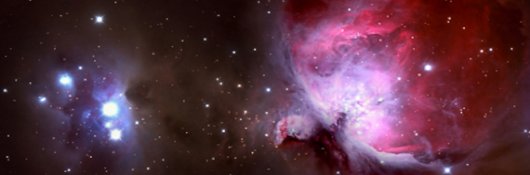
The mysteries of the cosmos have long been a source of wonder, inspiring countless individuals to gaze upward and seek understanding. Indeed, the sheer vastness of space, filled with its shimmering stars, intriguing planets, and staggering phenomena, holds infinite secrets waiting to be unveiled. By delving into the study of the night skies, we not only learn about the multitudes of celestial objects that pepper the universe but also gain insights into the intricate dance that shapes their formation and behavior.
Introducing a comprehensive course designed to elevate your understanding of the universe. Within these lessons, you'll journey through the celestial wonders of our night sky, discover the marvels within our solar system, traverse the expanse of our galaxy, and reach into the incredible vastness that lies beyond.
Here's a sneak peek into what awaits you:
-
Lesson 1: Cosmic View: Begin with a panoramic introduction to the universe. Explore how the cosmos is organized and its mind-boggling scale. Delve into the latest data regarding the observable universe's size, currently estimated to be about 93 billion light-years in diameter.
-
Lesson 2: Constellations: Dive into the patterns of stars that have guided civilizations for millennia. Understand their historical significance and the stories they've inspired, from Orion the Hunter to the Big Dipper.
-
Lesson 3: Exploring the Solar System: Journey through our immediate cosmic neighborhood. Examine the latest discoveries about our fellow planets, such as Mars' subterranean saltwater lakes and Saturn's mesmerizing rings.
-
Lesson 4: Planets and Moons: Delve deeper into the characteristics and compositions of our solar system's celestial bodies. For example, explore Jupiter's turbulent storms or the icy geysers on Saturn's moon, Enceladus.
-
Lesson 5: Space Exploration - The Final Frontier: Travel back in time to the early days of space exploration, from the iconic Apollo moon landings to the Voyager missions. Then, investigate the cutting-edge endeavors of today, such as the James Webb Space Telescope and its groundbreaking observations.
-
Lesson 6: Future Plans for Space Exploration: Peer into the horizon of what's next. Analyze ambitious projects like NASA's Artemis program, aiming to return humans to the moon, and the conceptual ideas surrounding Mars colonization.
-
Lesson 7: Exploring Beyond the Solar System - Black Holes: Enter the mysterious realms of black holes. Learn about their formation, their incredible gravitational pull, and the event horizon – the point of no return.
-
Lesson 8: Quasars, Supernovae, Brown Dwarfs, String Theory: Venture further with a closer look at these fascinating celestial phenomena and groundbreaking theories. Explore quasars' incredible luminosity, the explosive end of stars as supernovae, and the implications of the string theory on our understanding of reality.
-
Lesson 9: Observation Made Simple: Conclude by returning to Earth, understanding the tools and techniques that allow us to study the vastness above. Discover the mechanics of optical telescopes, and how evolving technology, like adaptive optics, has transformed our ability to gaze deeper into space than ever before.
So, if you've ever looked up at the night sky with curiosity, longing to know more about the twinkling stars and distant galaxies, this course is your gateway to understanding. Dive into the depths of space and time, and unravel the universe's profound mysteries. The cosmos awaits your exploration!
- Completely Online
- Self-Paced
- Printable Lessons
- Full HD Video

- 6 Months to Complete
- 24/7 Availability
- Start Anytime
- PC & Mac Compatible
- Android & iOS Friendly
- Accredited CEUs

Learning Outcomes
- Identify and describe the major and minor constellations.
- Identify and describe our solar system.
- Describe and differentiate the planets and moons of our solar system
- Describe both the history and future plans of space exploration.
- Describe Black Holes, Quasars, Supernovae, Brown Dwarfs, String Theory.
- Demonstrate basic functions of using a telescope.
- Demonstrate mastery of lesson content at levels of 70% or higher.
Assessment Guide
| Assessment | Points |
|---|---|
| Lessons 1 & 2 Exam | 13 points |
| Lesson 4 Assignment | 25 points |
| Lessons 3 & 4 Exam | 14 points |
| Lesson 5 Assignment | 25 points |
| Lesson 6 Assignment | 25 points |
| Lessons 5 & 6 Exam | 14 points |
| Lesson 8 Assignment | 25 points |
| Lessons 7 & 8 Exam | 12 points |
| Lesson 9 Assignment | 25 points |
| Lesson 9 Exam | 15 points |





Loading...



Follow Us Online