
Online Class: Economics 101

no certificate
with CEU Certificate*
-
11Lessons
-
23Exams &
Assignments -
2,867Students
have taken this course -
17Hours
average time -
1.7CEUs
Course Description
Unlocking the Mysteries of Economics: From Basics to Practical Application
In the modern era, soundbites and snippets from media often influence public perception about economics. Yet, with economic principles influencing everything from global policy to daily household decisions, a deeper, more nuanced understanding becomes crucial.
Economics is not just the study of wealth or financial dynamics; it's an examination of how societies manage resources, make choices, and address scarcity. Every day, consciously or not, individuals make economic decisions that ripple out into wider societal and global systems.
Course Vision
Our comprehensive course is designed to bridge the knowledge gap, providing a clear and engaging roadmap to the world of economics. We aim to offer learners a foundational grasp of economic concepts and their relevance, breaking down complex ideas into digestible modules. This course covers a wide spectrum of topics, from the historical roots of economics to its various schools of thought, and from the micro-level decisions of households to the macro-level dynamics that shape national economies.
Curriculum Breakdown
-
Lesson 1: Definition, History, and Various Forms of Economics - Understand the evolution of economic thought and explore different economic systems throughout history. For example, how did ancient trade systems differ from today's globalized economy?
-
Lesson 2: Schools of Thought - Dive into the diverse perspectives within economics, from classical and Keynesian theories to more modern approaches. How do different economic theories interpret the 2008 financial crisis?
-
Lesson 3: Ten Major Principles of Economics - Learn the foundational concepts that underpin all economic discussions, such as scarcity, opportunity cost, and market efficiency.
-
Lesson 4: World Economic Systems and Comparative Economics - Delve into the various economic systems around the world, comparing their strengths and weaknesses. What can we learn from the Scandinavian model versus the U.S. capitalist approach?
-
Lesson 5: Components in Societal Economy - Examine the building blocks of any economy, including labor, capital, and entrepreneurship. How do these components interplay in a thriving economy?
-
Lesson 6: Basic Tenets of the U.S. Economic System - Uncover the principles guiding one of the world's most influential economies. How does the U.S. handle issues like monopoly, competition, and public goods?
-
Lesson 7: Global Economies: Ranking National Economies - Assess the world's major economies, understanding the metrics and indicators that determine their standing. For instance, why has China seen such rapid economic growth in recent decades?
-
Lesson 8: Micro and Macro: Styles of Economics - Understand the distinction between individual, business, and national economic decisions. How do choices made at a local coffee shop impact the broader economy?
-
Lesson 9: Federal Reserve System: aka "The Fed" - Dive into the pivotal role central banks play in stabilizing and guiding economies, with a particular focus on the U.S. Federal Reserve. What tools does the Fed use to combat economic downturns?
-
Lesson 10: Managerial Economics - Learn how economic principles can guide business decisions, from pricing to production. How can understanding elasticity improve a company's bottom line?
-
Lesson 11: Gross National Product (GNP) and Gross Domestic Product (GDP) - Decode these crucial indicators of economic health. How did global GDP figures shift during the COVID-19 pandemic?
Why This Course?
Whether you aspire to better manage your personal finances, launch a business venture, or simply become a more informed global citizen, this course lays the groundwork. We've designed it to be accessible without sacrificing depth, ensuring that learners come away with both the big-picture perspective and attention to detail required to navigate the economic landscapes of today and tomorrow. Join us and unravel the complexities of economics, empowering yourself in a world where these principles play an ever-growing role.



Course Motivation
Although we have seen the words in print or heard them being broadcasted, do we really understand what, on a basic level, economics refers to or how the concept applies to our everyday lives?
In an attempt to help make sense of economics, what it does, how it works and, as a whole, and the sizable role it plays in shaping a society's infrastructure, this course will attempt to take complex ideas and present them in comprehensible, nugget size pieces of information.
When we speak of broad topics with far ranging ramifications, we do better discussing them in very general terms. If we begin to isolate specific examples, we run the risk of losing sight of the bigger picture.
This then, is the case with the term economics. Covering a most expansive subject area, we begin with an all encompassing definition from which we will later extrapolate to detailed themes and congruent ideas.
The purpose in studying economics leads to the formulation of principles. All of the following social elements: history, politics, and the social sciences, cannot be fully grasped without first coming to a basic understanding of economic principles.
Wants and Needs versus Scarcity
In the previous definition, the notion of wants and needs enters into the equation. Due to the pivotal role each plays, it is important to separate the two by identifying wants as those thingsnot considered essential whereas needs are critical to continued survival. To discern the difference between the two, decisions with economic consequences must be made.
Scarcity of resources is another factor that often comes into the economics spectrum. When items such as fuel sources, designer or luxury merchandise, or livestock products become less plentiful, decisions regarding the introduction of alternative products or the rate at which to increase prices need to be weighed.
As a whole, when the problem of scarcity, or limited resources, is part of the dynamics, then both manufacturers and buyers alike are confronted with an array of issues.
In subsequent lessons, we will explore, from both a macro and microeconomic mentality, the factors that play a part in determining how and why economic based decisions are made; metrics on which economic systems are evaluated, and the basic economic principles to employ as a business owner or as a person within the corporate sector. For the meantime, however, we will provide an overview of the term and its usage in the Twenty-First Century.
Economics: Brief History
Economics: Real World Applications
As a whole, principles of economics can be applied to all facets of life, from consumerism to politics. While classified as a social science, many argue that because it is difficult for economists to perform formalized experiments, establish hypotheses, or make predictions, economics does not qualify as an exact science. Unique in that sense, economics is plagued with practical and moral ambiguities that result in unpredictable outcomes based upon human behavior.
To gain a better understanding of the workings and connections between financial systems and markets, individuals study the principles of economics not only in school but also in business or in academic environments.
Due to constant changes and sweeping evolutionary arcs, economics certainly does make for a challenging subject to study. Based not only upon theoretical ideas, but also on multifaceted systems, using the principles is not always easy when considering real world applications of economics.
To gain a sense of the widespread use of economics, we provide a sampling of various subdivisions of economics that currently exist:
· Globalization. Also referred to as global economies, this is the process by which the people of the world become unified within one concentric system. It is often applied to practices that are brought from one culture and then applied on a broader, international scale. Aside from economics, the ideas of sociocultural, technological, and political forces also contribute to the concept of globalization.
· Macroeconomic. This is the study of the overall system of economics.
· Microeconomics. This is the study of how one component of the overall system affects a particular business or other parts of the system.
· Socioeconomics. Study of the relationship that exists between economic activity and real life interactions. Due to the emergence of theories and methods from sociology, economics, history, and psychology, socioeconomics is considered to be a multidisciplinary field.
· Urban economics. Considered to be a growing field, urban economics concentrates on the crossover areas between real estate or land use and legal tender. Going beyond the simple ideas of land placement and utilities, urban economics takes into account such city issues as crime, education, public transit, housing, and local government finance.
From banking and healthcare to government and civil service, a wide range of job opportunities exist in the field of economics. Examples include financial analysts, budget controllers, public policy administrators, market research facilitators, statisticians, and econometricians.
In short, Economics encapsulates a vast body of information. It is not always an easy subject to pare down into comprehensible components. In some ways, economics is actually relatively simple, dealing with revenue streams and the viability of markets and nations. However, in other areas the likes of market forces, recessions, and inflation, economics becomes extremely layered and based on the situations at hand.
Further complicating matters are an unending number of variables. For example, unemployment rates, monetary values, and interest rates involved within the economic structure.
In light of the labyrinth of data and possible scenarios, economists tend to speak in beliefs and forecasting terms as opposed to making statements in concrete terms.
Yet, if one was to boil down the whole concept of economics into a simple idea or phrase, "money makes the world go round" could be used as one way of simply explaining economics.
- Completely Online
- Self-Paced
- Printable Lessons
- Full HD Video

- 6 Months to Complete
- 24/7 Availability
- Start Anytime
- PC & Mac Compatible
- Android & iOS Friendly
- Accredited CEUs
Course Lessons


Lesson 1: Definition, History and Various Forms of Economics
 Lesson 1 Video
 Lesson discussions: Study of Economics; Reasons for Taking this Course
 Complete: Lesson 1, Assignment 1
- Assessment: Lesson I Quiz
Lesson 2: Schools of Thought
- Lesson 2 Video
- Lesson discussions: Impact!
- Complete: Lesson 2, Assignment 1
- Assessment: Lesson 2 Quiz
Lesson 3: Ten Major Principles of Economics
- Lesson 3 Video
- Complete: Lesson 3, Assignment 1
- Assessment: Lesson 3 Quiz
Lesson 4: World Economic Systems and Comparative Economics
- Lesson 4 Video
- Complete: Lesson 4, Assignment 1
- Assessment: Lesson 4 Quiz
Lesson 5: Components in Societal Economy
- Lesson 5 Video
- Complete: Lesson 5, Assignment 1
- Assessment: Lesson 5 Quiz
Lesson 6: Basic Tenets of the U.S. Economic System
- Lesson 6 Video
- Complete: Lesson 6, Assignment 1
- Assessment: Lesson 6 Quiz
Lesson 7: Global Economies: Ranking National Economies
- Lesson 7 Video
- Complete: Lesson 7, Assignment 1
- Assessment: Lesson 7 Quiz
Lesson 8: Micro and Macro: Styles of Economics
- Lesson 8 Video
- Complete: Lesson 8, Assignment 1
- Assessment: Lesson 8 Quiz
Lesson 9: Federal Reserve System: aka "The Fed"
- Lesson 9 Video
- Lesson discussions: Money, Money, Money
- Complete: Lesson 9, Assignment 1
- Assessment: Lesson 9 Quiz
Lesson 10: Managerial Economics
- Lesson 10 Video
- Complete: Lesson 10, Assignment 1
- Assessment: Lesson 10 Quiz
Lesson 11: Gross National Product (GNP) and Gross Domestic Product (GDP)
- Lesson 11 Video
- Lesson discussions: How would you rate this course?; Program Evaluation Follow-up Survey (End of Course); Course Comments
- Complete: Lesson 11, Assignment 1
- Assessment: Lesson 11 Quiz
- Assessment: The Final Exam
Learning Outcomes
- Define economics.
- Summarize the history of economics.
- Describe the ten major principles of economics.
- Describe the components in Societal Economy.
- Summarize Global Economies.
- Compare and contrast Micro and Macro Economics.
- Describe the Federal Reserve System.
- Define the Gross National Product (GNP) and Gross Domestic Product (GDP).
- Demonstrate mastery of lesson content at levels of 70% or higher.
Additional Course Information
- Document Your Lifelong Learning Achievements
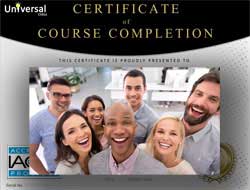
- Earn an Official Certificate Documenting Course Hours and CEUs
- Verify Your Certificate with a Unique Serial Number Online
- View and Share Your Certificate Online or Download/Print as PDF
- Display Your Certificate on Your Resume and Promote Your Achievements Using Social Media

Choose Your Subscription Plan
No Certificate / No CEUs
This course only
| Includes certificate | X |
| Includes CEUs | X |
| Self-paced |

|
| Instructor support |
|
| Time to complete | 6 months |
| No. of courses | 1 course |
Certificate & CEUs
This course only
| Includes certificate |
|
| Includes CEUs |
|
| Self-paced |
|
| Instructor support |
|
| Time to complete | 6 months |
| No. of courses | 1 course |
Certificates & CEUs
Includes all 600+ courses
| Includes certificate |
|
| Includes CEUs |
|
| Self-paced |
|
| Instructor support |
|
| Time to complete | 12 Months |
| No. of courses | 600+ |
Certificates & CEUs
Includes all 600+ courses
| Includes certificate |
|
| Includes CEUs |
|
| Self-paced |
|
| Instructor support |
|
| Time to complete | 24 Months |
| No. of courses | 600+ |
Student Testimonials
- "Loved it, the course taught me quite a lot" -- Emeriza G.
- "I enjoyed the course and the ability to go at my own pace. I particularly liked the recommended links and the reference to the self teaching guide. I thought these were very helpful and an added benefit." -- Pamela R.
- "Everything was helpful. Instructor was great! Thanks!" -- Marcus M.
- "Concise and efficient! Cordial and excellent arrangement of subject matter to build learning from simple to complex ideas. Enjoyed taking his courses. Would have like to be a student of his in a real life class. The videos were excellent focus material!" -- Yolanda R.
- "A very good course indeed. The instructor is an expert who is kind enough to make the course easier to learn. Thank you.. For me, all parts are equally helpful. I consider each topic as integral part to the whole course." -- Geraldito G.
- "Great overview of economics. I learned a lot. What an amazing instructor. His classes are well written and teach a lot and he grades fast." -- Sarah K.
- "All of the lessons were extremely helpful...I have enjoyed the whole ides of being able to take these courses from my home." -- Manuel H G.
Related Courses
-
 87 hours
8.7 CEUs
Writing Help Course Bundle
+ More Info
87 hours
8.7 CEUs
Writing Help Course Bundle
+ More Info
-
 6 hours
0.6 CEUs
Debt Reduction
+ More Info
6 hours
0.6 CEUs
Debt Reduction
+ More Info
-
 5 hours
0.5 CEUs
SalesForce 101
+ More Info
5 hours
0.5 CEUs
SalesForce 101
+ More Info
-
 8 hours
0.8 CEUs
Assertiveness Training
+ More Info
8 hours
0.8 CEUs
Assertiveness Training
+ More Info
-
 6 hours
0.6 CEUs
Persuasion Techniques
+ More Info
6 hours
0.6 CEUs
Persuasion Techniques
+ More Info
-
 12 hours
1.2 CEUs
How to Write Case Studies
+ More Info
12 hours
1.2 CEUs
How to Write Case Studies
+ More Info
-
 10 hours
1.0 CEUs
Mastering Sales Skills 101
+ More Info
10 hours
1.0 CEUs
Mastering Sales Skills 101
+ More Info
-
 6 hours
0.6 CEUs
How to Run an Effective Help Desk
+ More Info
6 hours
0.6 CEUs
How to Run an Effective Help Desk
+ More Info
-
 3 hours
0.3 CEUs
Marketing Outreach
+ More Info
3 hours
0.3 CEUs
Marketing Outreach
+ More Info
-
 8 hours
0.8 CEUs
Strategic Planning
+ More Info
8 hours
0.8 CEUs
Strategic Planning
+ More Info
-
 8 hours
0.8 CEUs
Payroll Management 101
+ More Info
8 hours
0.8 CEUs
Payroll Management 101
+ More Info
-
 11 hours
1.1 CEUs
How to Write Effective Policies and Procedures
+ More Info
11 hours
1.1 CEUs
How to Write Effective Policies and Procedures
+ More Info
-
 11 hours
1.1 CEUs
Writing Effective Emails in the Workplace
+ More Info
11 hours
1.1 CEUs
Writing Effective Emails in the Workplace
+ More Info
-
 2 hours
0.2 CEUs
Understanding Insurance Types
+ More Info
2 hours
0.2 CEUs
Understanding Insurance Types
+ More Info
-
 8 hours
0.8 CEUs
Investing 201: Intro to Commodity, Options, and Futures Markets
+ More Info
8 hours
0.8 CEUs
Investing 201: Intro to Commodity, Options, and Futures Markets
+ More Info
-
 7 hours
0.7 CEUs
Healthy Relationships
+ More Info
7 hours
0.7 CEUs
Healthy Relationships
+ More Info
-
 7 hours
0.7 CEUs
Negotiation Skills
+ More Info
7 hours
0.7 CEUs
Negotiation Skills
+ More Info
-
 7 hours
0.7 CEUs
Retirement Planning
+ More Info
7 hours
0.7 CEUs
Retirement Planning
+ More Info
-
 4 hours
0.4 CEUs
Business Budgeting 101: How to Plan, Save, and Manage
+ More Info
4 hours
0.4 CEUs
Business Budgeting 101: How to Plan, Save, and Manage
+ More Info
-
 5 hours
0.5 CEUs
Accounts Receivable Management
+ More Info
5 hours
0.5 CEUs
Accounts Receivable Management
+ More Info
-
 19 hours
1.9 CEUs
Business Writing
+ More Info
19 hours
1.9 CEUs
Business Writing
+ More Info
-
 8 hours
0.8 CEUs
Legal Terminology 101
+ More Info
8 hours
0.8 CEUs
Legal Terminology 101
+ More Info
-
 9 hours
0.9 CEUs
Resume Writing 101
+ More Info
9 hours
0.9 CEUs
Resume Writing 101
+ More Info
-
 7 hours
0.7 CEUs
Estate Planning
+ More Info
7 hours
0.7 CEUs
Estate Planning
+ More Info
-
 5 hours
0.5 CEUs
Habits of Millionaires
+ More Info
5 hours
0.5 CEUs
Habits of Millionaires
+ More Info
-
 5 hours
0.5 CEUs
Operations Management 101
+ More Info
5 hours
0.5 CEUs
Operations Management 101
+ More Info
-
 7 hours
0.7 CEUs
Accounts Payable Management
+ More Info
7 hours
0.7 CEUs
Accounts Payable Management
+ More Info
-
 7 hours
0.7 CEUs
Conflict Resolution Techniques
+ More Info
7 hours
0.7 CEUs
Conflict Resolution Techniques
+ More Info
-
 6 hours
0.6 CEUs
How to Start and Run an Online Business
+ More Info
6 hours
0.6 CEUs
How to Start and Run an Online Business
+ More Info
-
 9 hours
0.9 CEUs
Microsoft Project Level 1
+ More Info
9 hours
0.9 CEUs
Microsoft Project Level 1
+ More Info
-
 6 hours
0.6 CEUs
Business Branding 101
+ More Info
6 hours
0.6 CEUs
Business Branding 101
+ More Info
-
 6 hours
0.6 CEUs
Confidence Building
+ More Info
6 hours
0.6 CEUs
Confidence Building
+ More Info
-
 7 hours
0.7 CEUs
Microsoft Visio Level 1
+ More Info
7 hours
0.7 CEUs
Microsoft Visio Level 1
+ More Info
-
 7 hours
0.7 CEUs
Marketing for Small Business 101
+ More Info
7 hours
0.7 CEUs
Marketing for Small Business 101
+ More Info
-
 5 hours
0.5 CEUs
Personal Finance 101: How to Manage Your Money
+ More Info
5 hours
0.5 CEUs
Personal Finance 101: How to Manage Your Money
+ More Info
-
 5 hours
0.5 CEUs
Creative Thinking
+ More Info
5 hours
0.5 CEUs
Creative Thinking
+ More Info
-
 5 hours
0.5 CEUs
Team Building 101
+ More Info
5 hours
0.5 CEUs
Team Building 101
+ More Info
Loading...



Follow Us Online